

Interconnectedness
Layers of connection...
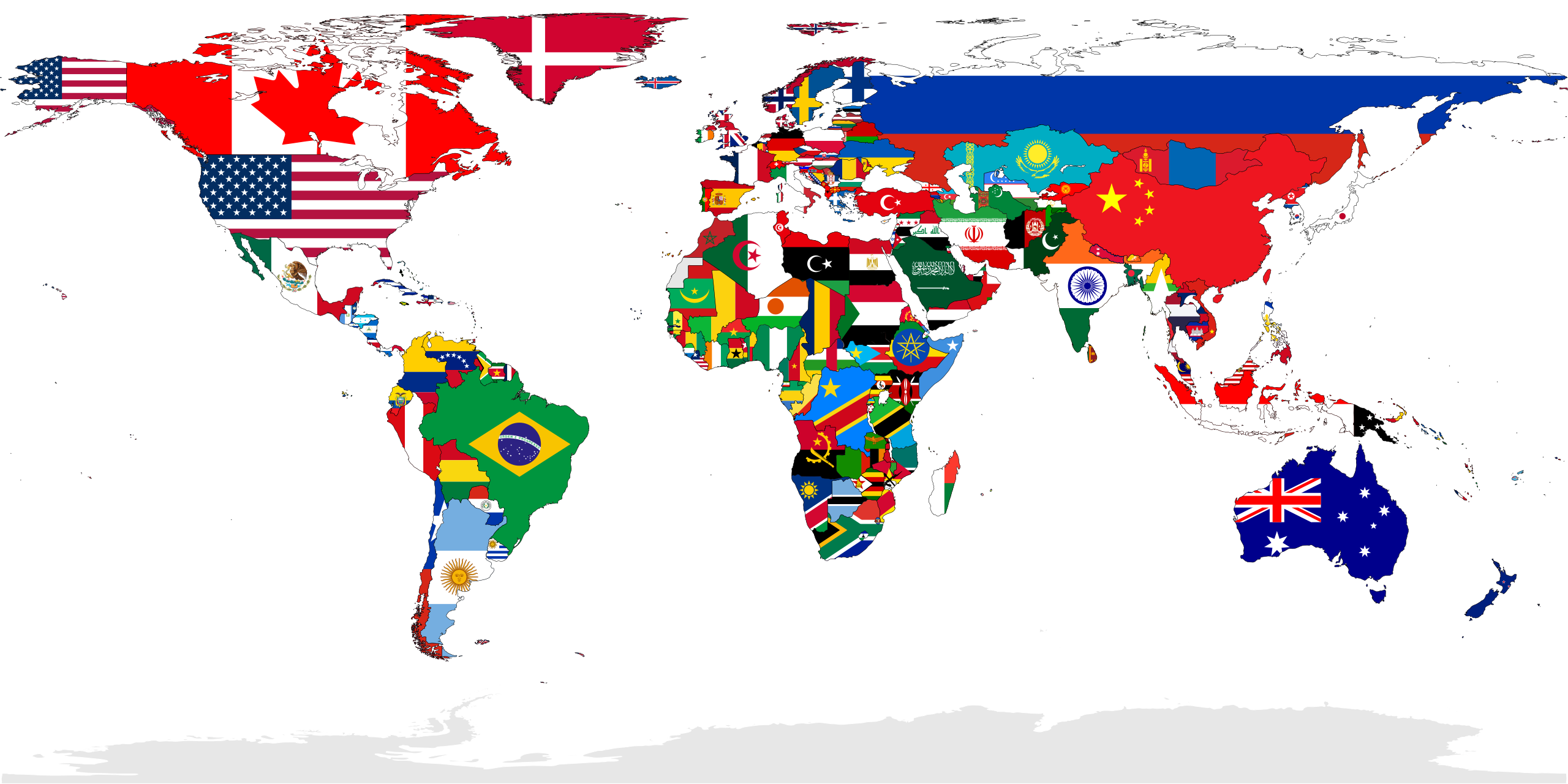
We are born as separate beings with our own thoughts, personalities and preferences, yet we are all linked by causality. We all share versions of the same chain of events to come into being. Everything in the universe is a manifestation of that creative power. Everything is interconnected with everything else.
This article deals with only five of the many ways we are interconnected to each other.
Humans and Things
Thich Nhat Hanh teaches that we see all things in one of three ways:
Things as they really are
Things as perceptions (representations)
Things as mere images
Most of the time we glance at something - a tree, a house, a rock - and move on. This becomes a mere image in our mind.
If we think about the object it becomes a perception or representation: what we think it is. The tree is a very tall plant with branches and green leaves. Maybe we might go as far as to learn they absorb carbon dioxide and exhale oxygen.
But if we engage all our senses and our mind, we may see that the tree is also sunlight, water, soil, and time. Looking deeper, we see that the tree is also the sun and the Earth. Going still deeper, we see that, just as a wave is inextricably part of the ocean, the tree is inextricably a part of the universe.
If we buy a pair of pants, we may notice its color, fabric and fit. But looking deeper, we see that the pants are the cotton farmer, the factory, the machines, the workers, the shippers, the container ship, the truck, the clothing store and its employees, etc.
It enriches us when we think of the origins of the objects that fill our lives, and express our gratitude and care for the wellbeing of the many people who make our pants (or whatever) possible. We can celebrate this interconnectedness.
Humans and Each Other
Humans are interconnected to other humans in ways we do not perceive. As we communicate, we alter each other’s perceptions, creating a connection. When we form a team, or attend a concert, our heart rates and brainwaves synchronize. When we express emotions to others, it has a ripple effect that can echo across the world.
The Internet has exponentially magnified the power of many individuals via social media, compounding the impact of emotions communicated online. According to the University of California:
… In 2023, there was an estimated 4.9 billion social media users worldwide. The average person spends 145 minutes on social media every day.
Viewing posts from friends and family across the world can be a way to make you feel more connected. However, social media use has a dark side.
Social media can negatively impact our overall wellbeing by fueling anxiety, depression, loneliness and FOMO (fear [of] missing out). These issues are especially prevalent in teens and young adults …
Understanding how social media impacts our mental health and overall wellbeing is important for yourself and your loved ones.
Like everything, human interconnectedness can be wholesome, unwholesome or neutral. As it is in offline life, it is wise when online to limit one’s exposure to negative or otherwise unwholesome content.
Those that harm others online are suffering from the delusion of separateness: the fact of our interconnectedness means that when we harm others we are also harming ourselves.
Humans and Nature
Despite our long history of delusional belief that nature is something to be conquered and tamed, our existence remains fully dependent on natural conditions we ultimately cannot control. According to Climate Lit:
… From animals to water to rocks to bacteria, our fates are inextricably intertwined. [The term, interconnectedness] understands the world as a set of systems in delicate balance with one another.
… interconnection can be seen within the feedback loops of ecosystems such as nutrient cycles, food webs, and microbiomes. The interdisciplinary field of systems sciences explores the complexity of systems in various settings, including nature, society, and the human body.
According to Sustainability Directory:
Interconnectedness … refers to the recognition that human well-being, societal stability, and economic systems are inextricably linked to the health and functioning of natural ecosystems. This understanding moves beyond the separation of human civilization from the environment, asserting that humanity is embedded within, and dependent upon, planetary processes. Acknowledging this fundamental relationship is essential…
Humans have long seen nature as a thing to be bent to the will of the ‘superior’ being. This has resulted in environmental damage.
According to Science Direct:
… nature is threatened by man who has become detached from it. Technology has endowed humans with the power of a major geological agency, which may act on a continental or even planetary scale (e.g. acid rain, photochemical smog, radioactive contamination, stratospheric ozone depletion, climate change) …
Our minds have enabled us to bend nature to suit human needs, often at the expense of ecosystems that directly affect human life. The results are now plain to see, as aquifers, wetlands and forests - the natural mechanisms that provide clean air and water - are being depleted worldwide.
Because our life depends on healthy ecosystems, we are interconnected with all of the flora and fauna that make ecosystems work. No species is expendable: each plays a part in the operation of an ecosystem.
The myth of human separateness from nature is a dangerous delusion.
Humans and Money
People are interconnected by money. Humans invented money as a convenience, but it quickly became an engine of greed used to amass wealth and power. Today, in the United States, the wealthiest among us comprise one percent of the population, yet control thirty percent of the wealth. Some wealthy people share their wealth in pursuit of worthy causes while others direct all their energies to amassing more wealth.
Money has power over us because we need it to buy essential items like shelter, food and water. We all need these essential things: it is another way that we are interconnected.
The simple fact is that the very wealthy could not exist without the less wealthy. Yet the love of money and the things it can buy has created a false social construct in which the very wealthy live in self-perpetuating isolation from the less wealthy.
According to OXFAM:
About 60 percent of billionaire wealth comes from one of three sources: inheritance, cronyism and corruption, or monopoly power. Trillions are being gifted in inheritance in particular, creating a new aristocratic oligarchy that has immense power in our politics and our economy.
Our deeply unequal world has a long history of colonial domination, which has largely benefited the richest people. The poorest, racialized people, as well as women and marginalized groups have and continue to be systematically exploited at huge human cost.
Excess money seems to breed delusion. What is the reason that the some of the richest people in the world contribute nothing toward helping their fellow humans?
According to the New York Times in the 2013 article, Rich People Just Care Less:
… research shows that people with the most social power pay scant attention to those with little such power. … Higher-status people are also more likely to express disregard, through facial expressions, and are more likely to take over the conversation and interrupt or look past the other speaker.
The people described in this article have lost something precious: the ability to care for their fellow humans. They are suffering from delusion, denying the fact that their very existence is dependent on other humans. Like all humans, they will grow old, experience sickness, be separated from all they hold dear and sooner or later die. Their memory and legacies will be measured by their deeds.
Humans and Corporations
Corporations are made up mostly of people who are dependent upon the corporation for their livelihoods. Like everything else, corporations can be wholesome (promoting wellbeing and happiness), unwholesome (creating harm), or neutral (harmless). Within the corporation, management is responsible for the profitability and efficiency of operations and personnel, and also the wellbeing of personnel as it may effect profitability and/or efficiency.
Employees of a corporation may suffer fear of losing their jobs and of losing benefits like health care and retirement savings, and may suffer craving for a raise in pay or promotion, and may suffer anger if and when they are denied a raise or promotion. These sufferings may lead workers to delusion, thinking of their coworkers as competitors or even enemies, thereby creating more suffering.
Other employees may quickly rise through the corporate hierarchy and find that their relationships with former equals have become more formal and less intimate than before. They may find they have sacrificed valued friendships for a raise in pay and realize too late what they have traded away. Or perhaps they, too, change their appraisal of these former friendships.
Corporations impose unnatural structures that cause suffering.
The competitive nature of the corporate world exacerbates the natural feelings of the separateness of living in a human body. We all share these feelings, and by them we are interconnected. To be aware of these feelings and understand that our connection to each other is to be free from the illusion of separateness.
Multinational corporations do business across borders worldwide, affecting everyone. Their influence is an excellent example of interconnectedness.
Paraphrasing Fiveable:
Technological advancements like container shipping and the internet have fostered interconnected economies by making it easier and cheaper to move goods across borders. These developments have facilitated trade and allowed businesses to operate globally, creating networks that connect economies around the world.
Multinational corporations significantly shape interconnected economies by establishing operations in multiple countries. Though they create jobs and stimulate local economies, they influence global supply chains and trade patterns, which may result in economic disparities, questionable labor practices and
Countries may benefit from increased trade and investment flow but may also find it difficult to implement independent economic policies. Global supply chains mean that domestic decisions can be influenced by international market conditions, leading to constraints on national policy-making. This dynamic raises important questions about how governments balance national interests with the realities of a globalized economy.
The decision-makers inside corporations may choose whether to recognize that their decisions affect people across the world, or they may choose to focus only on profit and the welfare of the corporation. Their decisions affect all of us. This is another way that we are all connected.
Conclusion
We are not separate. We are interconnected. Our connection extends to all beings and things. To care for everyone and everything beyond ourselves is to care for ourselves.
May all beings everywhere
with whom we are inseparably interconnected,
be fulfilled, awakened, liberated, and free.
May there be peace in this world
and throughout the entire universe,
and may we all together complete the spiritual journey.

— Lama Surya Das